Archive › United States › BARC / LARC LX
BARC / LARC LX
United States · Lighter · built by LeTourneau (prototypes); Treadwell Construction Co. (production)
| Also known as | LARC-LX, LARC-60, Barge, Amphibious, Resupply, Cargo, Besson's Ark |
|---|---|
| Manufacturer | LeTourneau (prototypes); Treadwell Construction Co. (production) |
| Country | United States |
| Built | 1952– |
| Type | Lighter |
| Status | Production |
| Use | Military |
| Propulsion | |
| Land drive | 4x4 |
| In water | Twin propellers |
| Hull | Monocoque steel |
| Engine | Four GMC (Detroit Diesel) 6-71 marine diesels, one per wheel |
| Power | 1060 hp |
| Dimensions & performance | |
| Length | 19.2 m |
| Width | 8.2 m |
| Weight | 88,500 kg |
| Speed on land | 32 km/h |
| Speed on water | 12 km/h |
Specifications need checking. Some figures here were taken from the archive and have not been confirmed against a source.
The BARC (Barge, Amphibious, Resupply, Cargo), redesignated LARC-LX or LARC-60 (Lighter, Amphibious, Resupply, Cargo) in 1960, was the US Army's giant wheeled amphibian. Designed to carry a 60-ton tank or a fully equipped infantry company between ship and shore where there was no port, it was the only Army amphibian able to land on a beach through breaking surf. Its sponsor, Major General Frank S. Besson, later Chief of Army Transportation, gave it the nickname "Besson's Ark".
Development and production
Four experimental BARCs were built by LeTourneau, Inc., and the first made its maiden voyage at Fort Lawton, Washington, in 1952. Production vehicles were built in the late 1950s by the Treadwell Construction Company at Midland, Pennsylvania. Local residents recalled them being driven along Route 68 to the Ohio River at Industry for trials; they were wider than the road, so traffic was stopped in both directions while they passed.
Design
The BARC is a steel vessel about 63 ft (19 m) long and 27 ft (8.2 m) wide, standing 17.5 ft high on four tyres 9.5 ft in diameter. Empty it weighed about 88 tons. Four 265 hp GMC (Detroit) 6-71 diesels each drive one wheel on land; afloat, the two engines on each side are coupled to one of the twin propellers. Top speed was about 20 mph (32 km/h) on land and 7.5 mph (12 km/h) in the water. Carrying 60 tons it had a range of 150 miles on land at 14 mph and 75 nautical miles at sea at 6 knots, and in overload it could take up to 100 tons, including two military vans or a 40 ft container, unloaded over a bow ramp. A veteran operator noted that it could crab sideways at about 30 degrees.
Vietnam
BARCs supported the 101st Airborne Division in Vietnam from 1967 and the 1st Cavalry Division in 1968. At Wunder Beach in July 1968 they worked round the clock, carrying M60 tanks, M113s and trucks from cargo ships straight onto the beach. Veterans' letters in the archive describe the companies based at Wunder Beach, Cam Ranh Bay and Vung Ro Bay, and long runs of about ten miles to Tuy Hoa, far more than the short ship-to-shore trips the vehicle was designed for. They always travelled in pairs. Their weak point was the air compressor, buried in the engine room, on which the whole control system depended; three BARCs were lost after mechanical failures left them broached on the beach, where not even bulldozers or helicopters could free them from the sand.
Later years
The Army still had 36 LARC-LXs in 1979, and a 1978 review judged it probably the most versatile lighter in the inventory, with far lower fuel consumption than the LACV-30 hovercraft. They were based at Fort Story, Virginia, until the 309th Transportation (LARC LX) Company, the Army's last amphibious company, was inactivated on 15 October 2001. Surplus examples have since been used commercially, for example for beach cable laying and heavy construction work, and several survive in private hands and museums.
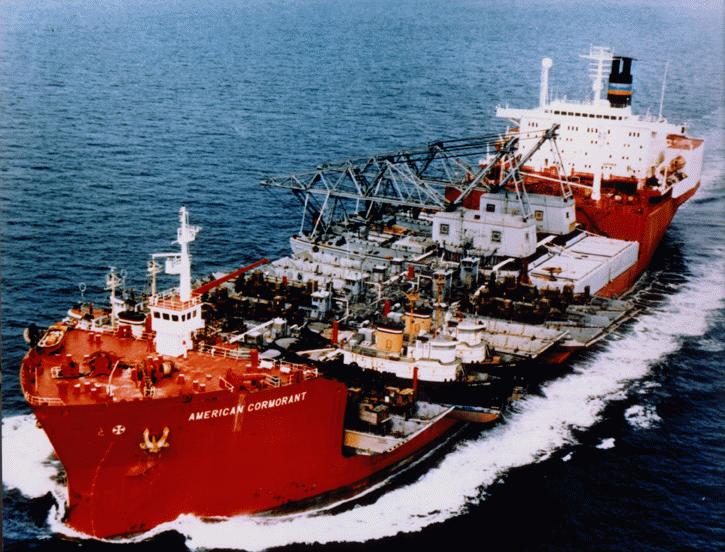
UPDATE 20th October 2026 In around 1995, two LARC LX craft arrived at the US Base in Hythe Southampton, UK (along with many tugs and landing craft to be modernised / refitted) on board the semi-submersible ship the American Cormorant (see photo). I was working there as a pipefitter at the time and was given the job of replacing the water cooling on the LARCS with new Cupronickel pipe. I finshed the starboard side on one of them and then they decided to scrap them. The story was that the moulds for the huge tyres were now owned by a scrap dealer who knew their worth and would only sell them for a hugely inflated sum of money, more than the US Army were prepared to pay and so they were both sold to Portsmouth scrap dealer Harry Pound. For many years they sat on the old firing range at Hilsea / Tipnor near Portsmouth, UK where they were vandalised (see photos). Apparently the British Army asked to move them as an exercise in heavy vehicle recovery and then they were cut up for scrap by Harry Pounds company. I remember the british guys who I worked with at the US Base struggling to manouvre them up the slipway and all said that they would hate to be driving them in a war zone with a top speed of about 17MPH on land, the lads said that would not want to drive them above about 7MPH!
Update information supplied by Chip Wilson
American Cormorant photo taken from https://man.fas.org/dod-101/sys/ship/tak-2062-american_comorant.jpg
Vandalised LARC LX photos taken from Amphibious Machines FB Group https://www.facebook.com/groups/674839532566149
5 Photographs
100 photographs in the archive folder. Click any image to view it full size.
6 Documents
- Manual TM 55-1930-203-10 Operator's Manual, LARC-LX (compiled copy) original
- Manual TM 55-1930-203-34 Direct and General Support Maintenance Manual, LARC-LX (US Army, 1988, changes to 1992) original
- Manual TM 55-1930-203-10 Operator's Manual, Lighter, Amphibious (LARC-LX), 60 ton (US Army, 1975 reprint) original
- Manual TM 55-1930-203-20 Organizational Maintenance Manual, LARC-LX (US Army, 1980, changes to 1992) original
7 Film
8 Related vehicles
Compare the BARC / LARC LX with another vehicle.
Know more about the BARC / LARC LX, or spotted a mistake? Email a correction or suggestion.